01 · THE MODELS
A timeline in steel & walnut
Key Winchester models, from the 1866 Yellow Boy to the anniversary rifles.
An American story.
One rifle at a time.
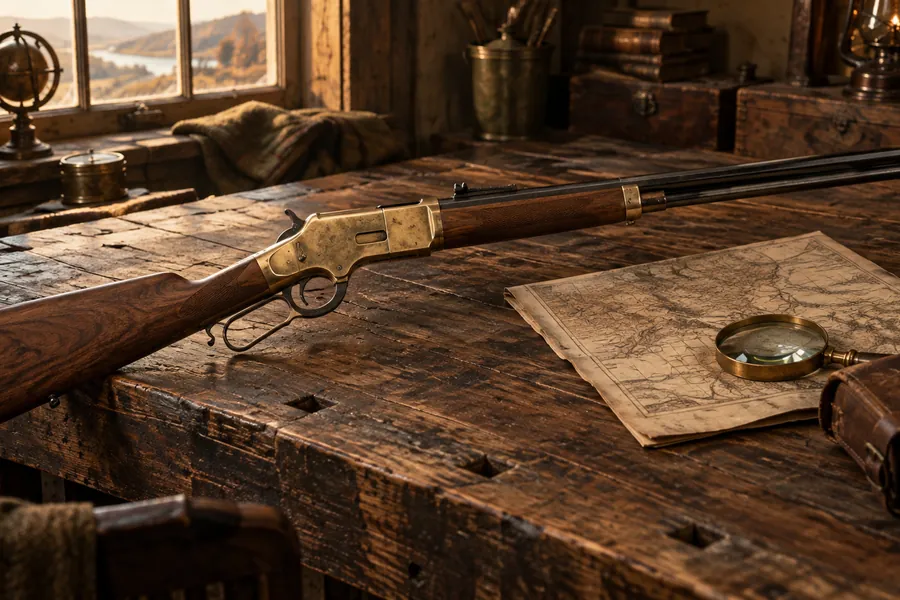
Explore Winchester history, from the brass-framed Model 1866 to the Model 70. The milestones, field traditions and collector stories behind the name.
START SOMEWHERE GOOD
Three ways into Winchester’s history.
01 · THE MODELS
Key Winchester models, from the 1866 Yellow Boy to the anniversary rifles.
02 · THE PLACES
Discover Nilo Farms, John Olin and a lasting conservation story.
03 · THE COLLECTORS
Commemorative rifles, provenance and the questions collectors ask.
KEEP EXPLORING
THE JOURNAL · 4 MIN
A serial-number chart is a starting point, not a complete biography. Build a research record that separates estimates, factory dates and family history.
THE JOURNAL · 4 MIN
Two familiar model names represent different chapters of Winchester history. Here is how to compare their origins without confusing a design with an individual…
THE JOURNAL · 2 MIN
Ask a rifle collector about the Winchester Model 70 and you will hear “pre-64” within a minute. The phrase describes rifles made before Winchester…
THE BIGGER PICTURE
In 1866 a brass-framed lever-action rifle left a factory in New Haven, Connecticut, carrying a name that would become shorthand for the American rifle: Winchester. A century and a half later, collectors, hunters and historians still argue about which model mattered most, swap stories about rifles handed down through three generations, and line up at auctions for commemorative editions.
This site is an independent guide to that story. It covers the 150th anniversary in 2016 alongside long-form articles on the rifles, the people and the places behind them.
Few firearms makers can draw a straight line from the 1860s to today. Winchester’s catalogue reads like a short history of American shooting: lever actions for the frontier, pump shotguns for the market hunter and the trap line, bolt actions for long-range big-game hunting, and military rifles produced by the hundreds of thousands in two world wars.
The guns also travelled. Ottoman troops fought with Model 1866 rifles, Canada’s North-West Mounted Police carried the Model 1876, and the Model 1895 was built under contract for the Russian army. Collectors today track serial numbers, factory letters and small production changes with the care usually reserved for rare books.
We write for three kinds of readers:
New articles are published on the blog. If you are researching a particular rifle, start with the milestones timeline and then read the collecting guide.