150 · THE HERITAGE JOURNAL
Nilo Farms: Winchester’s Hunting Tradition
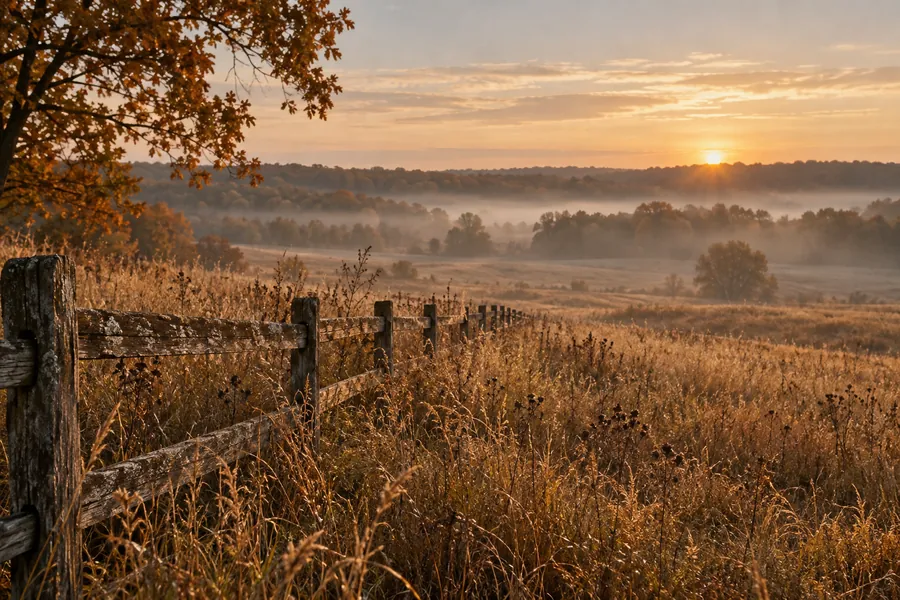
Nilo Farms is a hunting preserve near Brighton, Illinois, a short drive from the Winchester-Western operations at East Alton. Its name is a clue to its founder: Nilo is Olin spelled backwards. John M. Olin, whose family company owned Winchester from 1931, established the farm in the early 1950s as a working demonstration of a simple idea: that well-managed land can produce excellent hunting year after year.
Why Olin built it
By the middle of the twentieth century, American upland bird hunting faced shrinking habitat and uneven management. Olin, a lifelong hunter and an important supporter of wildlife conservation, wanted a place that showed landowners, game managers and sportsmen what careful habitat work could achieve. Nilo Farms became a laboratory for raising and releasing pheasants and quail, for planting cover and food plots, and for running a hunting operation that paid its way.
The preserve also served Winchester commercially: shooters who enjoyed a day in the field bought guns and ammunition, and the company could test products in real hunting conditions.
King Buck and the retriever tradition
Nilo is closely tied to retriever training. Its most famous dog was King Buck, a black Labrador owned by Olin and trained by the kennel’s staff. King Buck won the National Retriever Championship in 1952 and again in 1953 and was later featured on a federal duck stamp, a rare honour for a real, named dog. The kennel that produced him helped popularise the Labrador as America’s hunting dog.
What a day at Nilo looks like
A typical upland hunt follows a pattern that has hardly changed in decades:
- Small groups work fields of native grasses and crop strips with pointing dogs or flushing dogs.
- Guides keep hunters spaced safely and pace the hunt so the dogs do most of the work.
- Birds are cleaned and packed at the end of the day; many hunters finish with a meal at the lodge.
Lessons for landowners
The ideas Nilo promoted still apply to anyone managing land for wildlife:
- Cover first. Birds need nesting and escape cover close to food; edges and strips beat large uniform fields.
- Plan the harvest. A sustainable hunt takes only what the habitat can replace.
- Measure. Count birds, record harvests and adjust plantings each season.
Nilo in the anniversary films
For Winchester’s 150th anniversary, Nilo Farms featured in a short film about the company’s hunting heritage, a reminder that the rifles and shotguns described elsewhere on this site were built to be used outdoors. To see how the guns themselves evolved, read our Winchester milestones.