150 · THE HERITAGE JOURNAL
How to Document a Family Winchester Story: A Simple Provenance File
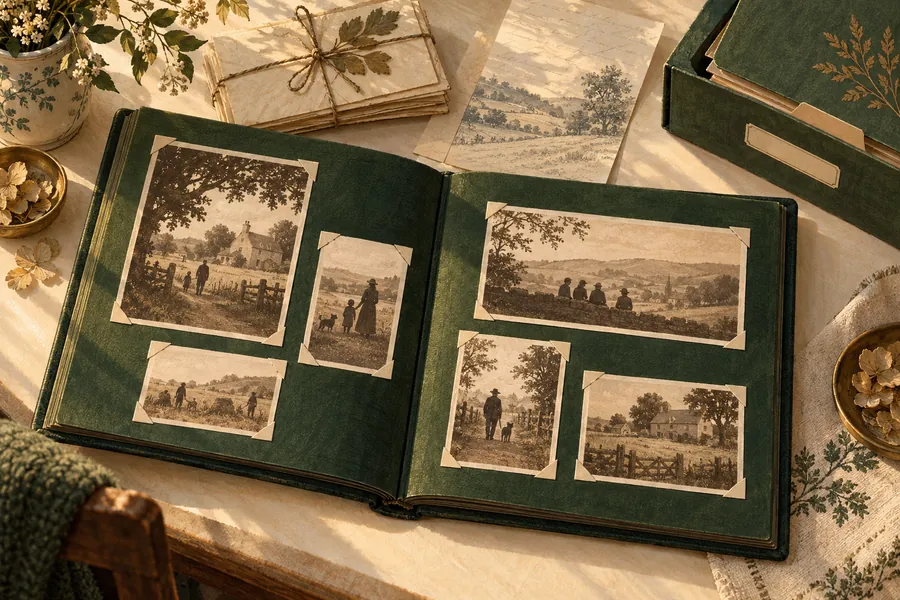
A family story can disappear even when the object at its center survives. Photographs lose captions, letters become separated from envelopes and an uncertain recollection hardens into a fact each time it is retold. A small provenance file preserves the connections while they are still available.
Here, provenance means a documented account of an object’s history and custody. You do not need a dramatic association or a famous owner to begin. Ordinary dates, names and careful source notes can make a modest family account useful to the next generation.
Create a cover sheet and an evidence index
Give the project a simple reference, such as “Family collection item 01.” Put that reference on your notes and digital folder, rather than attaching new labels to the object or writing on old documents. On the cover sheet, identify who prepared the file and when it was last updated.
List the evidence as separate items: photograph 01, letter 01, archive response 01 and interview 01. For each, record the current custodian, the physical or digital location and a brief description. If a document is only a copy, say so. This index is what lets another person move from the story to the material supporting it.
Keep recollection and documentation in separate fields
Ask a relative what they remember before suggesting an answer. Useful prompts include: Who told you the story? Did you witness the event yourself? Is there a photograph or letter connected with it? Record the conversation date and, with their agreement, their name.
Use three headings: “documented,” “recalled” and “unresolved.” A dated photograph may document that an object was present at an event. A recollection may identify the person pictured. Whether it is the same object now in the family can remain an open question. Keeping those statements apart preserves the value of all three.
The Share a Memory page is a starting point for a public account. Write that account from the evidence index, so appealing details do not outrun the sources.
Digitize without discarding the originals
The National Archives’ family digitization guidance recommends retaining original papers and photographs after creating digital copies. It also advises against automatic document feeders for fragile or valuable papers, and emphasizes basic descriptive information and backups. A scan is another useful copy, not a reason to throw the source away.
Photograph both sides of a captioned photograph and include an envelope with its letter. Preserve an unedited master copy. Make a separate reading copy if you crop an image or adjust its contrast, and label that version as edited. Give related files a shared reference so their connection remains obvious outside your current computer.
Write an evidence-based timeline
Use one row or paragraph per event. Each entry needs a date or range, a claim, an evidence reference and a confidence note. This fictional example shows the distinction:
- 1930s, approximate: a relative recalls an object in the family home. Source: interview 01, recorded in 2026.
- 1948: a dated photograph shows the named relative with a firearm. Source: photograph 01. Exact model identification unresolved.
- 2026: existing family papers assembled into this file. Source: this cover sheet.
Leave a gap when nothing supports an intervening event. Use the Winchester milestones for background chronology, not as a substitute for evidence about the family’s own history.
Store, share and maintain the file
For the papers themselves, the Center of the West’s family archive guide recommends appropriate archival enclosures and avoiding damp storage areas. Keep fragile originals available for careful consultation rather than repeatedly passing them around with a draft story.
Maintain more than one digital copy, including one stored separately from your everyday device. Give a trusted family member the index and enough information to locate the originals. For a public version, remove addresses, private contact details and material the contributors did not agree to share.
Add new evidence as a dated revision instead of silently rewriting the earlier file. A reliable family history remains open to correction. If you send material to the site, use the contact information and explain which details are documented, which are memories and which still need investigation.